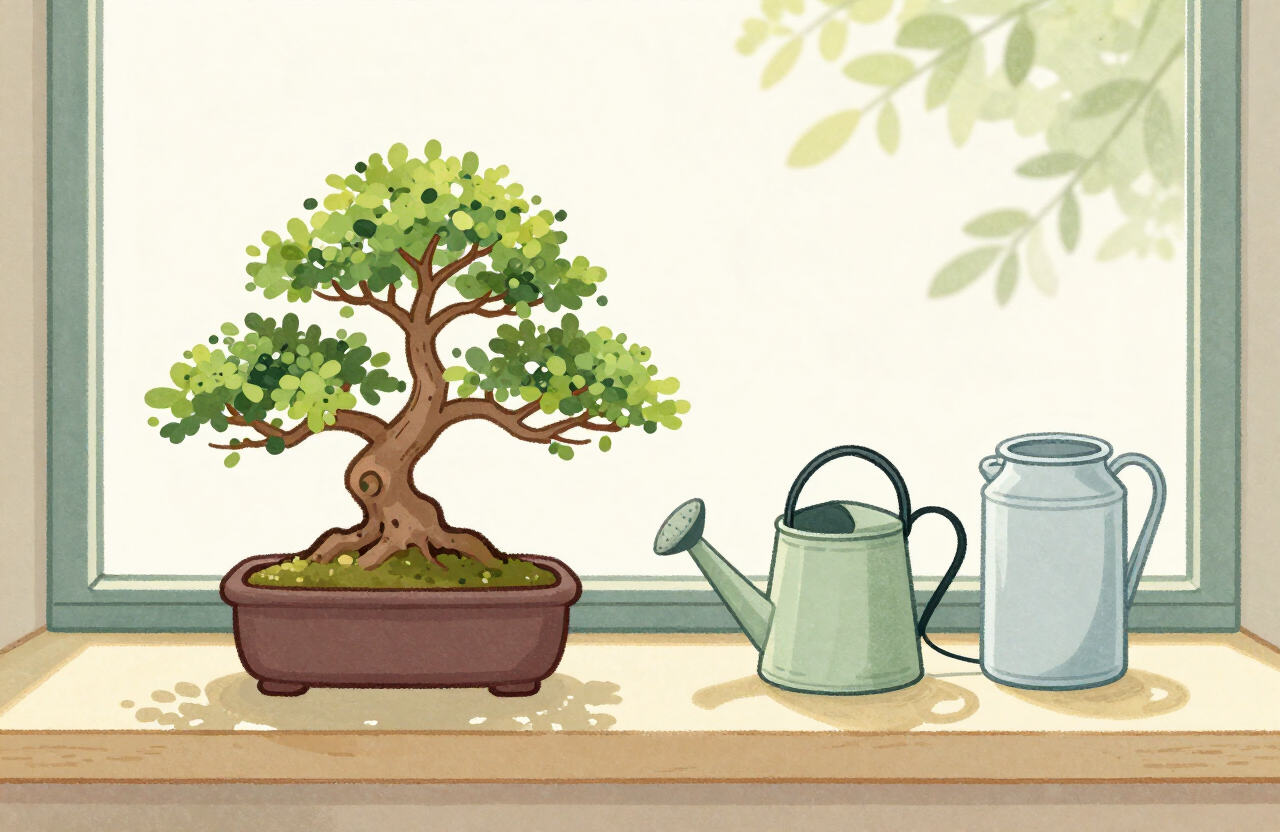
Understand the limits of a water bath
Placing the pot in a bowl or tray of water (the “bath” method) can keep the soil moist for a short time, but it is not a reliable two-week watering solution. The roots sit in standing water, which displaces air from the soil and can lead to prolonged waterlogging and root rot — especially for drought-loving species. Use it only for short absences of a few days, only for moisture-tolerant trees, and never as a default for every trip.
Ask a trusted person to water
This is the most dependable option and works for every species and any trip length. Leave clear, simple instructions: check the soil moisture before watering, water only when needed, empty indoor drip trays, and note the date each visit. A quick photo of your usual routine helps. For outdoor trees in summer heat, ask for a daily check; small pots can dry in hours.
Try a wicking or self-watering setup
A cotton cord wicking from a water reservoir into the soil can extend watering by several days to about a week for suitable species. Test the setup a week before you travel — wicking rates vary with cord thickness, substrate and pot size, and a setup that works indoors may fail outdoors in heat or wind. It suits moisture-tolerant indoor trees best; pair it with a check-in person for longer trips.
Prepare your tree before you leave
Water thoroughly the day you depart. Move outdoor trees out of harsh wind and afternoon sun, and group indoor trees together to raise local humidity. Do not fertilize, repot or heavily prune right before a trip — a stressed tree copes worse with neglect. Check the forecast for heatwaves or frost and arrange protection accordingly.
Match the method to the tree
Drought-tolerant species — juniper, dwarf jade and bougainvillea — should avoid the water-bath method entirely; standing water rots their roots. Dwarf jade is the easiest traveler and often fine for one to two weeks without water in good light. Moisture-loving indoor trees — tiger ficus, ginseng ficus, Chinese serissa and Fukien tea — tolerate a wick or brief shallow tray, but ginseng ficus’s swollen roots rot easily, so keep any bath short and shallow. Chinese elm adapts well to a wick indoors. Gingko and bougainvillea, being outdoor and seasonal, need a real check during active growth; in winter dormancy they need little water — just keep the soil from drying fully. Juniper needs a cold winter rest, so winter travel is about protecting the pot, not watering heavily.
A common mistake to avoid
Trusting a bowl of water to keep any bonsai alive for two weeks. For drought-loving species like juniper, dwarf jade and bougainvillea, standing water does more harm than good.
Every tree and growing environment is different. For major work or a declining tree, get species-specific advice from a local bonsai club or nursery.
KEEP LEARNINGChoosing your first bonsai