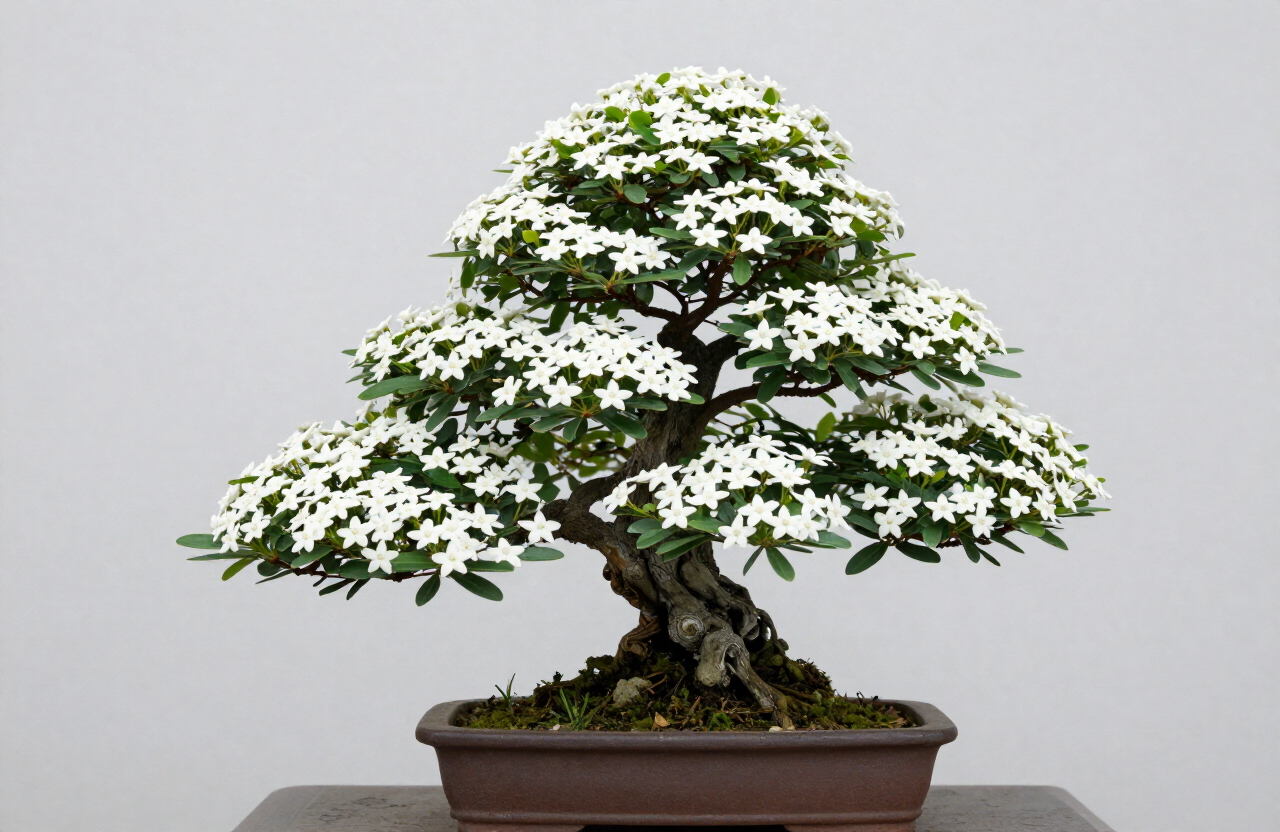
Chinese Serissa
A delicate flowering bonsai that dislikes change. Stable conditions reward you with small white blooms.
Serissa japonica
Light & placement
Bright light; some direct morning sun is ideal.
Watering
Keep evenly moist. Never let it dry fully, and never let it sit in standing water.
Feeding
A light application of Osmocote Classic 14-14-14 in spring, refreshed every four months. Reduce in winter.
Repotting & soil
Every 2 years, handled carefully. Use 2 parts cactus mix to 1 part perlite. Repot in late spring after flowering.
Climate & humidity
15–24°C (59–75°F). Warm, stable conditions encourage flowering.
18–27°C (65–80°F). Avoid hot, stuffy spots; good air movement helps.
15–22°C (59–72°F). Keep conditions steady as light fades.
Keep above 10°C (50°F), ideally 15–20°C. Sudden chills or cold drafts trigger heavy leaf drop.
Prefers moderate to high humidity around 50–70%. Mist regularly or use a humidity tray; dry air causes yellowing leaves.
Good to know
- Hates being moved — expect some leaf drop
- Stable temperature and humidity help
- Prune lightly after flowering
A common mistake to avoid
Frequent moves or sudden changes, which trigger heavy leaf drop.
Every tree and growing environment is different. For major work or a declining tree, get species-specific advice from a local bonsai club or nursery.
NEXT SPECIESFukien Tea